Integrin Alpha V Recombinant Rabbit mAb (一抗) - WB,IHC-P,IHC-F,IF,IP | Bioss
Rrmab?兔单抗
货号:bsm-62846R
产品详情
相关标记
相关产品
相关文献
常见问题
概述
产品编号
bsm-62846R
产品类型
重组兔单抗
英文名称
Integrin Alpha V Recombinant Rabbit mAb
中文名称
整合素αV(CD51)重组兔单抗
英文别名
CD51; MSK8; VNRA; VTNR; ITAV_HUMAN; ITGAV; Vitronectin receptor; Vitronectin receptor subunit alpha; integrin subunit alpha V; antigen identified by monoclonal antibody L230; integrin, alpha V (vitronectin receptor, alpha polypeptide, antigen CD51); integrin, alpha V
抗体来源
Rabbit
免疫原
A synthesized peptide derived from human Integrin alpha V: 31-250/1048
亚型
IgG
性状
Liquid
纯化方法
affinity purified by Protein A
克隆类型
Recombinant
克隆号
12B7
理论分子量
116 kDa
检测分子量
120-145 kDa
储存液
10mM phosphate buffered saline(pH 7.4) with 150mM sodium chloride, 0.05% BSA, 0.02% Proclin300 and 50% glycerol.
研究领域
Cardiovascular > Angiogenesis > Adhesion / ECM > Integrins
Cardiovascular > Atherosclerosis > Vascular Inflammation > Leukocyte recruitment > Integrins
Cardiovascular > Blood > Platelets
Microbiology > Interspecies Interaction > Host Virus Interaction
Stem Cells > Hematopoietic Progenitors > Lymphoid > T Lymphocytic Lineage
SWISS
Gene ID
保存条件
Store at 4℃ for short term. Store at -20℃ for long term. Avoid repeated freeze/thaw cycles.
注意事项
This product as supplied is intended for research use only, not for use in human, therapeutic or diagnostic applications.
背景资料
The alpha-V (ITGAV) integrins are receptors for vitronectin, cytotactin, fibronectin, fibrinogen, laminin, matrix metalloproteinase-2, osteopontin, osteomodulin, prothrombin, thrombospondin and vWF. They recognize the sequence R-G-D in a wide array of ligands. ITGAV:ITGB3 binds to fractalkine (CX3CL1) and may act as its coreceptor in CX3CR1-dependent fractalkine signaling.
基因名
ITGAV
蛋白名
Integrin alpha-V
亚基
Heterodimer of an alpha and a beta subunit. The alpha subunit is composed of an heavy and a light chain linked by a disulfide bond. Alpha-V associates with either beta-1, beta-3, beta-5, beta-6 or beta-8 subunit. Interacts with HIV-1 Tat. Alpha-V/beta-6 binds to foot-and-mouth disease virus (FMDV) VP1 protein and acts as a receptor for this viru. Alpha-V/beta-6 binds to coxsackievirus A9 and coxsackievirus B1 capsid proteins and acts as a receptor for these viruses. Interacts with RAB25.
亚细胞定位
Cell Membrane
相似性
Belongs to the integrin alpha chain family.
Contains 7 FG-GAP repeats.
Contains 7 FG-GAP repeats.
功能
The alpha-V integrins are receptors for vitronectin, cytotactin, fibronectin, fibrinogen, laminin, matrix metalloproteinase-2, osteopontin, osteomodulin, prothrombin, thrombospondin and vWF. They recognize the sequence R-G-D in a wide array of ligands. In case of HIV-1 infection, the interaction with extracellular viral Tat protein seems to enhance angiogenesis in Kaposi's sarcoma lesions.
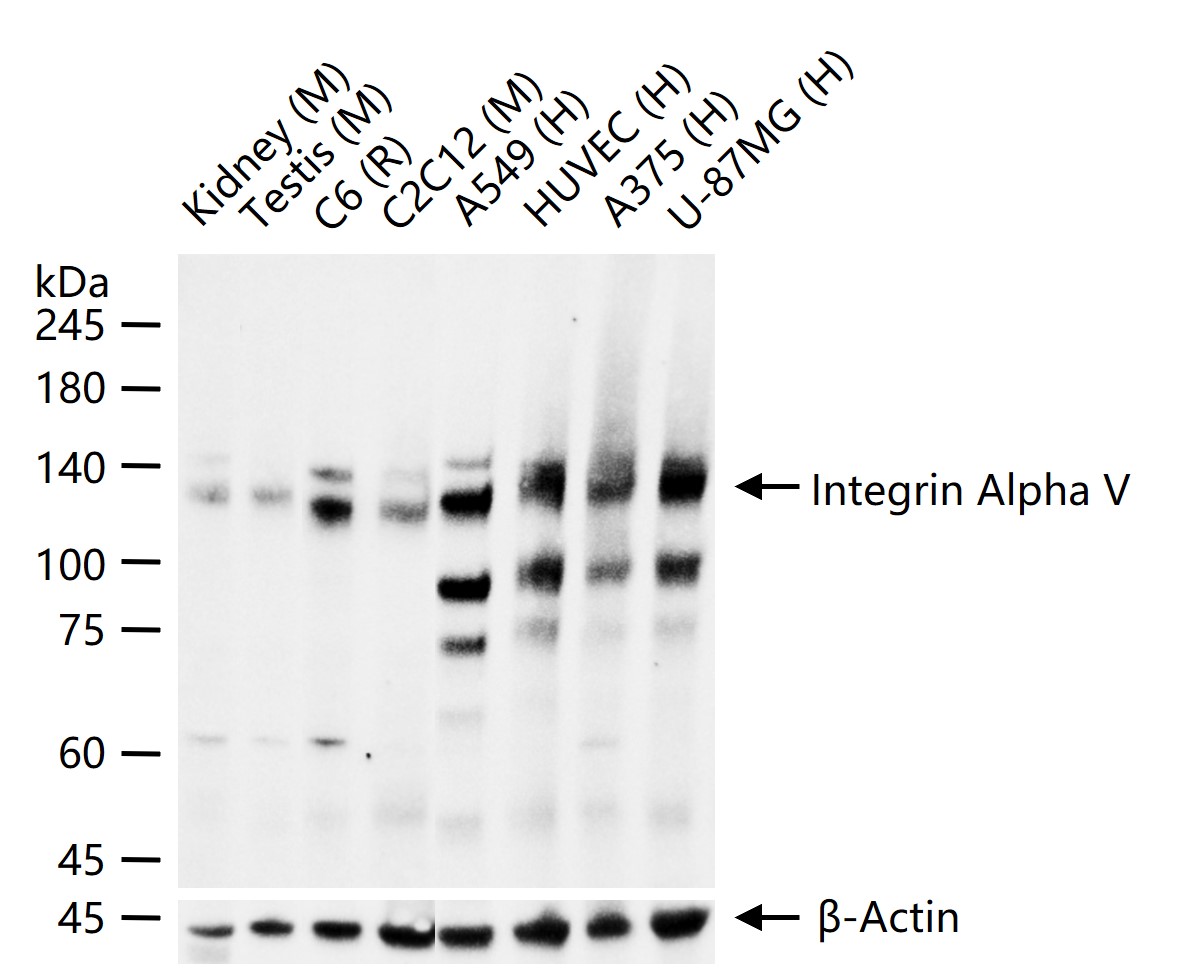
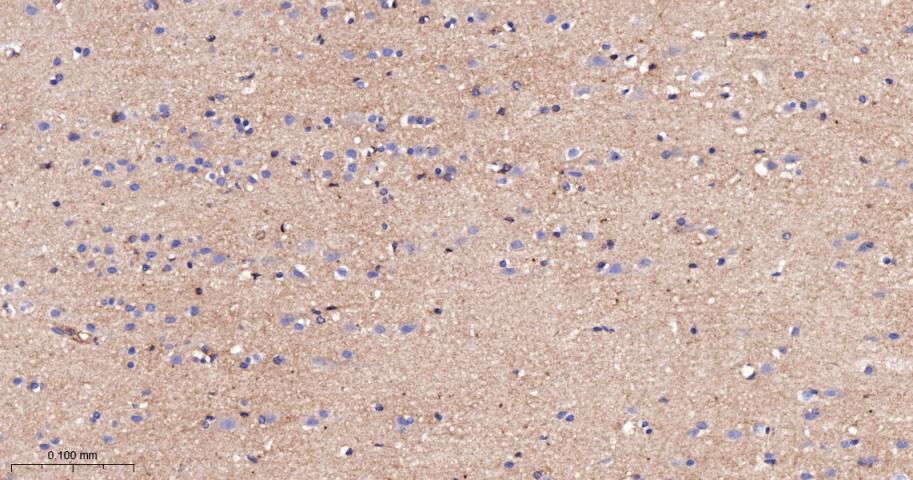
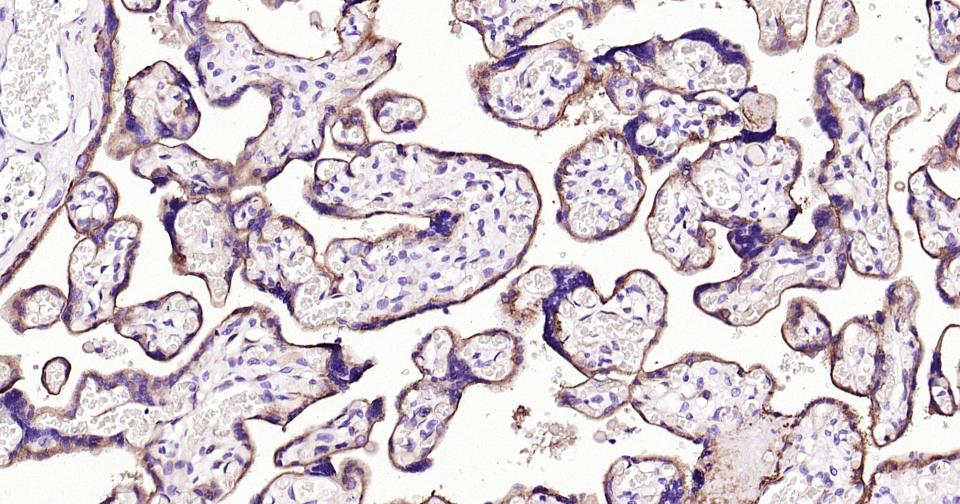
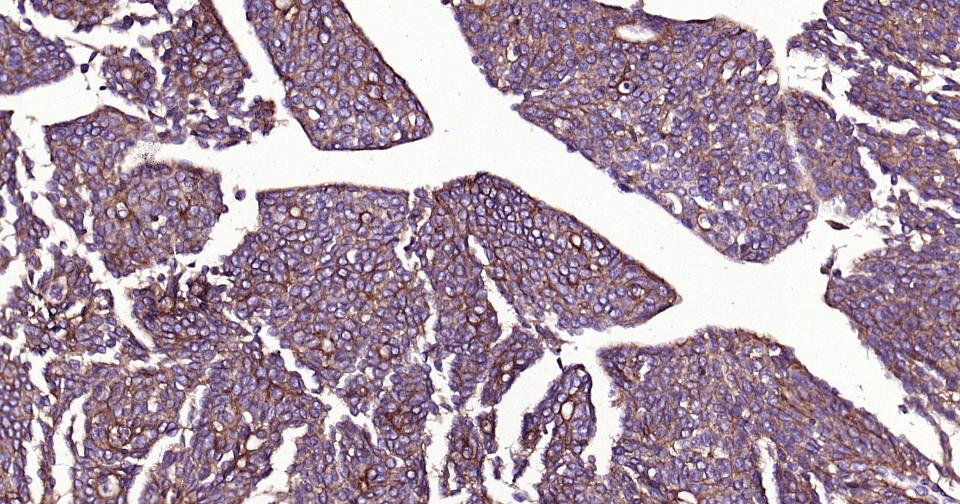
产品应用
| 应用 | 已检合格种属 | 预测种属 | 推荐稀释比例 |
|---|---|---|---|
| WB | Human, Mouse, Rat | 1:1000-5000 | |
| IHC-P | Human | Mouse, Rat | 1:200-800 |
| IHC-F | Human | Mouse, Rat | 1:200-800 |
| IF | Human | Mouse, Rat | 1:200-800 |
| IP | Human, Mouse, Rat | 1:20-100 |
交叉反应
交叉反应: Human, Mouse, Rat
相关产品
暂无相关产品
同靶标产品
相关文献
提示: 发表研究结果有使用 bsm-62846R 时请让我们知道,以便我们可以引用参考文章。作为回馈,资料提供者将获得我们送上的小礼品。