【26年9月文献战报】博奥森高分文献精彩呈现

截至目前,引用Bioss产品发表的文献共41,471篇,总影响因子217,199.01分,发表在Nature, Science, Cell, Cancer Cell以及Immunity等顶级期刊的文献共147篇,合作单位覆盖了清华、北大、复旦、华盛顿大学、麻省理工学院、东京大学以及纽约大学等上百所国际知名研究机构。
我们每月收集引用Bioss产品发表的文献。若您在当月已发表SCI文章,但未被我公司收集,请致电Bioss,我们将赠予现金鼓励,金额标准请参考“发文章领奖金”活动页面。
本文主要分享10篇IF≥18的文献,它们引用了Bioss产品,分别发表在Advanced Materials、Nature Aging、Journal of Extracellular Vesicles、Bone Research、Advanced Functional Materials、Nature Protocols、Nature Communications期刊上,让我们一起学习吧。
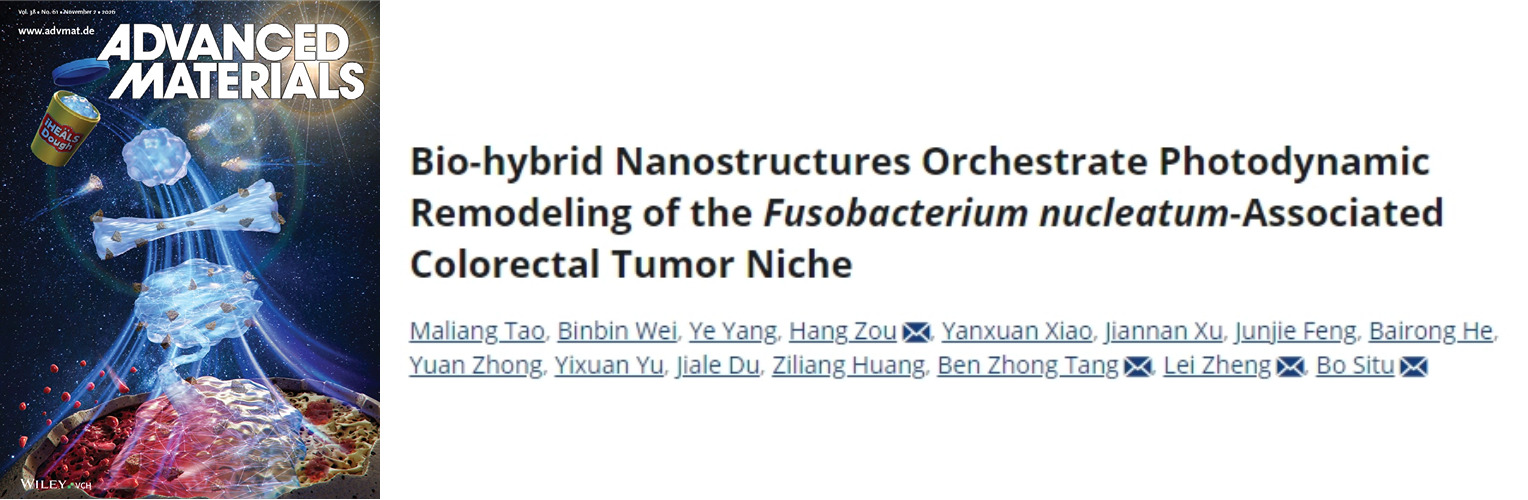
Advanced Materials [IF=29.1]
文献引用产品:
bs-0295G-HRP | Goat anti-Rabbit IgG (H&L) pAb, HRP conj. | WB
作者单位:南方医科大学
摘要:The intratumoral microbiota acts as a microbial immune checkpoint in colorectal cancer (CRC), yet current strategies either kill silently without immune activation or permit bacterial rebound through incomplete targeting. Here we report a bio-hybrid assembly designed to synchronize the eradication of CRC cells and their tumor-associated Fusobacterium nucleatum. This system integrates a hemoglobin (Hb)-augmented aggregation-induced emission (AIE) photosensitizing module into cRGD-functionalized ginger-derived vesicles. This architecture couples Hb-associated oxygen availability with molecular confinement of the photosensitizer while harnessing the intrinsic anti-inflammatory components of the plant carrier to mitigate off-target toxicity. Light activation initiates a dual cascade: it induces lysosomal pyroptosis in malignant cells and disrupts key F. nucleatum pathways related to membrane transport and DNA repair. This synchronized killing elicits the coordinated release of damage- and pathogen-associated molecular patterns (PAMPs), effectively transforming an immunologically cold tumor into a robust in situ vaccine that drives dendritic cell maturation and systemic T-cell immunity. Our findings demonstrate that the integration of natural bioactivity with supramolecular engineering provides a biocompatible strategy for coordinated tumor–bacterial disruption and immunogenic remodeling of the F. nucleatum-associated tumor niche in CRC.
文献引用产品:
bs-5039R | APOE | APOE3 Rabbit pAb | IHC, ICC
作者单位:美国哥伦比亚大学
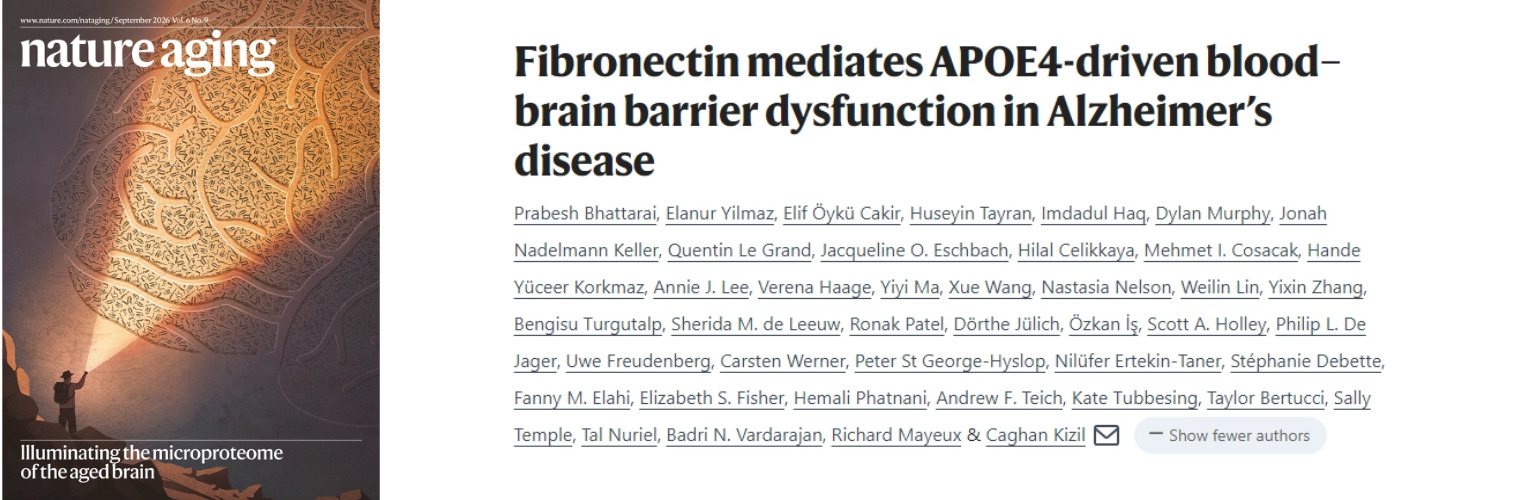
摘要:Blood–brain barrier (BBB) dysfunction is an early feature of Alzheimer’s disease (AD) and is particularly pronounced in individuals carrying the APOE ε4 allele, but the mechanisms linking APOE ε4 to BBB failure remain unclear. Here we show that astrocyte-derived fibronectin (FN1) is a key mediator of apolipoprotein E4 (APOE4)-driven BBB dysfunction in AD. Using postmortem human brain tissue, human three-dimensional vascular models and in vivo models, we demonstrate that APOE4, amyloid-β42 and inflammatory signals induce astrocytic FN1 upregulation and excessive perivascular deposition. Fibronectin accumulation is sufficient to cause BBB leakage and disrupt VEGF/HB-EGF/IGF-1 signaling through integrin-mediated focal adhesion kinase activity. Reducing fibronectin or restoring growth factor signaling rescues BBB function in vitro and in vivo. Together, evidence from experimental models, human brain tissue and clinical datasets identifies fibronectin as a proximal mediator of APOE4-driven gliovascular dysfunction and highlights FN1 as a potential therapeutic target for vascular and BBB dysfunction in AD.
Journal of Extracellular
Vesicles [IF=21.7]
文献引用产品:
作者单位:南方医科大学
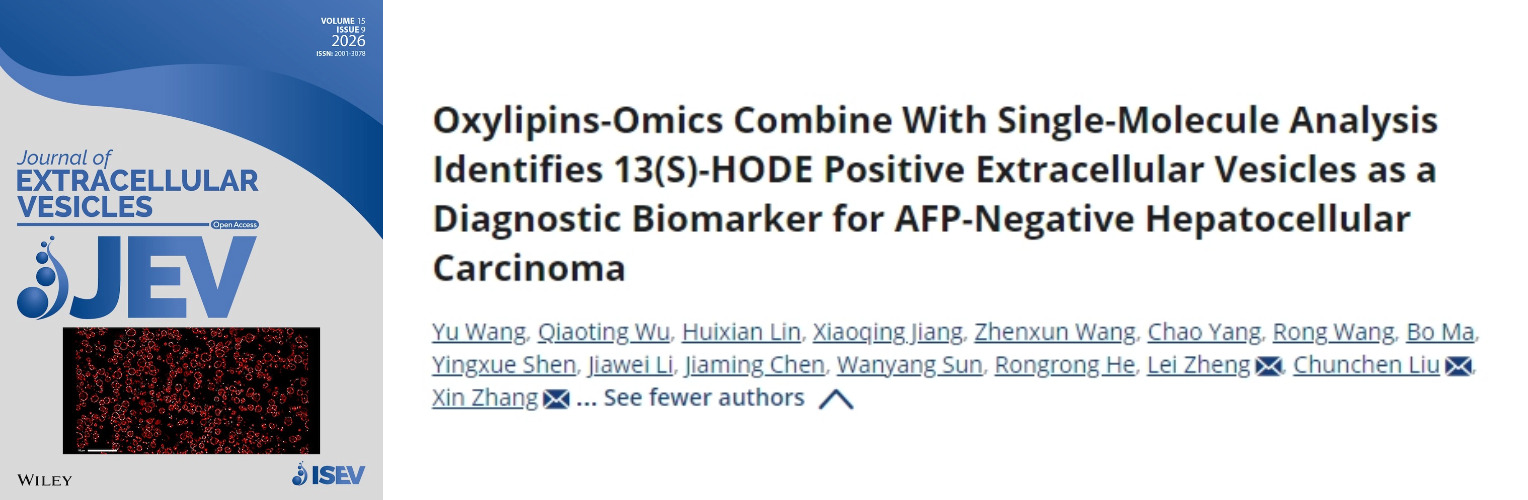
摘要:Efficient diagnostic biomarkers enable early detection of hepatocellular carcinoma (HCC), which improves survival. Circulating extracellular vesicles (EVs) in plasma, as a noninvasive diagnostic carrier, have caused widely concern. Here, a novel oxylipidomic profiling was used to analysis the HCC patients’ tissue-derived EVs (TD-EVs) cargo and revealing differentially expressed oxylipins (vs. adjacent tissues, p<0.05), which undetected in bulk tissues. The hub oxylipins 13(S)-HODE discovered in TD-EVs was validated in plasma derived EVs (PD-EVs) by using single-molecule analysis platform, showing superior efficacy in AFP-negative HCC patients (AUC = 0.8474 vs. 0.7627 in AFP-positive). Clinically, machine learning integrating EV-derived 13(S)-HODE with routine clinical parameters of HCC patients was developed to optimize diagnostic classification. The machine learning model, LightGBM, achieved outstanding performance: AUC_mean = 0.962, Sensitivity = 0.933 (0.660–0.997), Specificity: 0.957(0.760–0.998), 95%CI: 0.958–1.000 in multi-group classification of HCC diagnostics, demonstrating the enhanced diagnostic efficiency of 13(S)-HODE positive EV subpopulation with other clinical data. This study firstly establishes EV-derived 13(S)-HODE as a concordantly biomarker across tissue and plasma sources. Furthermore, single-molecule analysis platform offers it a highly sensitive diagnostic performance for HCC, particularly valuable for AFP-negative HCC subgroup.
Journal of Extracellular
Vesicles [IF=21.7]
文献引用产品:
bs-1100R | CD36 Rabbit pAb | WB
bs-20769R | RXRA | RXR-alpha Rabbit pAb | WB, IFbs-1973R | LPL | Lipoprotein lipase Rabbit pAb | WB
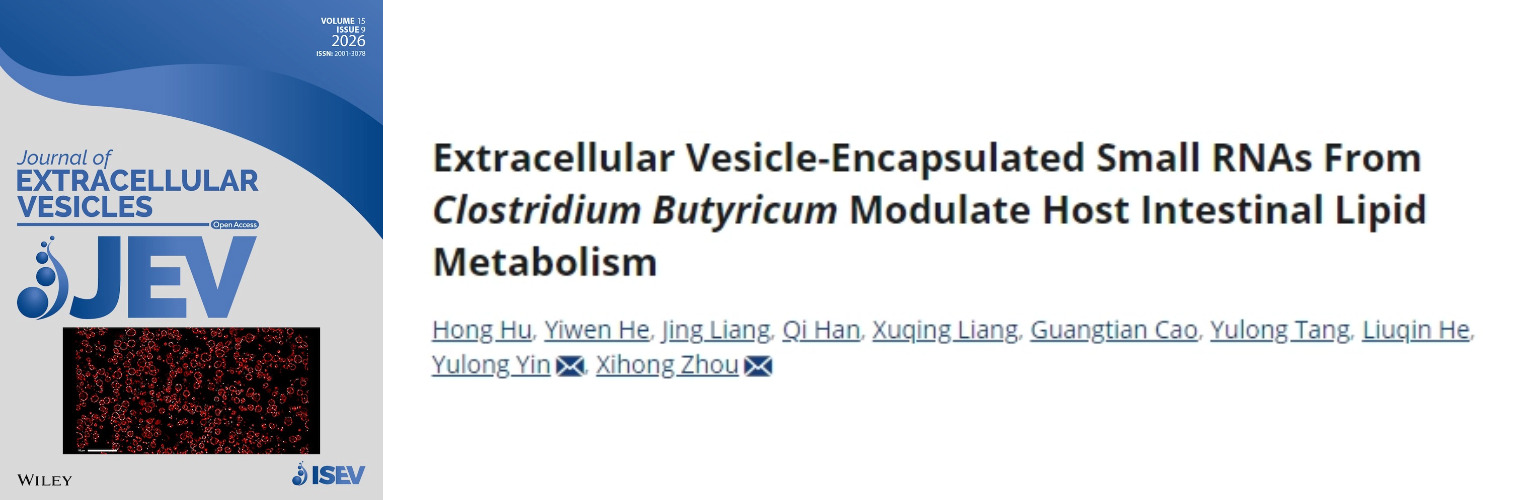
摘要:The gut microbiota plays a critical role in regulating intestinal lipid metabolism, yet the mechanisms governing microbiota–host interactions during lipid uptake remain unclear. Here, we examined the relationship between fat digestibility and gut microbial composition, and found that piglets with higher apparent crude fat digestibility exhibited enhanced lipid absorption and oxidation, accompanied by reduced abundance of Clostridium butyricum in the ileal mucosa. Furthermore, oral administration of C. butyricum suppressed intestinal lipid absorption and oxidation by inhibiting PPARα signaling. Mechanistically, extracellular vesicles (EVs) derived from C. butyricum can enter intestinal epithelial cells and mediate the anti-lipid absorption effects by delivering miRNA-like RNAs (milRNAs), particularly milRNA-3020179, which primarily targeted host genes including PPARα and Rxra. Supplementation with C. butyricum or its EVs prevented lipid accumulation and attenuated the development of metabolic abnormalities in high-fat diet-fed mice, whereas deletion of milRNA-3020179 in C. butyricum abolished its effects on lipid deposition in intestinal organoids. Collectively, these findings identify C. butyricum-derived EV milRNAs as candidate microbial regulators of host lipid metabolism through modulation of PPARα signaling, providing insights into microbiota-driven control of intestinal lipid homeostasis.
Bone Research [IF=20.1]
文献引用产品:
bs-0468R-FITC | PECAM1 | CD31 Rabbit pAb, FITC conj. | FACS
bs-1134R | RUNX2 | CBFA1 Rabbit pAb | WB
作者单位:四川大学华西口腔医院
摘要:Periosteal cells (PCs) play a crucial role in bone regeneration. Currently, the spatial landscapes of jaw-bone periosteum during bone grafting remains unclear. In this study, we propose a modified guided bone regeneration (GBR) model and integrate single-cell RNA sequencing (scRNA-seq) and spatial transcriptomics (ST) to dissect its spatial characteristics. We identify a functional subset of Ctsk+Fmod+ PCs within the jaw-bone periosteum of rat and human. In addition, we describe a spatial niche around the bone graft substitute, characterized by massive infiltration of macrophages interacting with Ctsk+Fmod+ PCs. Notably, SPP1 secreted by macrophages attenuates the osteogenic capacity of Ctsk+Fmod+ PCs. The discovery of this Ctsk+Fmod+ subcluster, characterized by osteoprogenitor features and close interactions with macrophages, sheds light on the composition of the subperiosteal microenvironment and the heterogeneity of jaw-bone PCs.
Advanced Functional
Materials [IF=19.9]
文献引用产品:
bs-2130R | MKI67 | Ki-67 Rabbit pAb | IF
bs-20403R | Cd68 Rabbit pAb | IF
作者单位:重庆医科大学附属口腔医院
摘要:Inflammation poses a therapeutic paradox, as cytokine signals driving inflammatory disease can also provide transient repair cues. Effective intervention therefore requires selective suppression of pathogenic mediators and control over inhibition timing. RNA-cleaving DNAzymes are well suited as transcript-selective catalytic effectors, but their therapeutic utility depends on discovering potent sequences and controlling when intracellular catalysis begins. Here, machine learning identifies highly active DNAzymes against tumor necrosis factor-α (TNF-α) as a model inflammatory regulator and reveals design principles governed by RNA accessibility and RNA–DNA interaction energetics. The optimized DNAzyme is incorporated into an upconversion nanoparticle-coupled DNA nanocage through photocleavable linkers, generating a photoresponsive construct for near-infrared-triggered release and spatiotemporally controlled gene silencing. The construct exhibits macrophage anti-inflammatory activity and, after microneedle delivery, shows efficacy alongside etanercept in a TNF-associated inflammatory skin disease model. Beyond this benchmark, the system is further applied to diabetic bone regeneration, where delayed activation reshapes inflammatory dynamics in a regenerative microenvironment. This temporal intervention preserves beneficial early inflammation while promoting subsequent resolution through enhanced efferocytosis, thereby accelerating bone repair and shifting DNAzyme therapy from indiscriminate inhibition toward phase-specific immunoregulation. This work establishes a machine-learning-guided, photoactivatable DNAzyme nanocage strategy to enable targeted inflammatory control and diabetic bone regeneration.
Nature Protocols [IF=18.4]

文献引用产品:
作者单位:上海交通大学医学院附属仁济医院
摘要:The engineering of living cells represents a promising biomedical frontier that enables the design of cells with tailored functionalities for advanced therapeutic applications. Genetic manipulation serves as a primary approach in cell engineering, yet it faces inherent limitations, including the complexity of multigene editing and poor cross-species applicability, which restrict the development of cells with sophisticated functionalities. Therefore, flexible and versatile engineering strategies capable of functionalizing living cells to address diverse therapeutic requirements are highly desirable. Given its pivotal role in mediating cellular interactions, the cell surface is an attractive target for directing cell engineering. The diverse functional groups present in surface biomolecules offer abundant chemical modification sites, making them highly amenable to functionalization. Leveraging this inherent chemical accessibility, we have recently developed a flexible and versatile platform for surface functionalization of living cells through in situ dopamine polymerization that allows us to design personalized living cells with customizable functions by tuning the surface components. Here we provide a detailed protocol describing two distinct methods for bacterial functionalization. The first method uses dopamine polymerization-mediated mono-functionalization to construct mucus-penetrating bacteria that can reinforce intestinal mucosal barrier to prevent colitis. The second method uses dopamine polymerization-mediated dual-functionalization to generate synergy-immunoactivation bacteria that can simultaneously induce anticancer and antiviral immunity to treat cancer and prevent infection. Excluding bacterial culture, preparation of mucus-penetrating bacteria and synergy-immunoactivation bacteria takes ~3 h and 1 h, respectively. We anticipate that this protocol can offer valuable guidance for the engineering of living cells with designable and tailorable functionalities for innovative cell-based therapy.
Nature Communications [IF=18.1]
文献引用产品:
bsm-61362R | NOS2 | iNOS Recombinant Rabbit mAb | FC
作者单位:中南大学湘雅医院
摘要:Chronic inflammation represents a great threat to human health, yet the lack of site-specific therapies often leads to suboptimal efficacy and serious side effects. Here we report an inflammatory targeting strategy leveraging myeloperoxidase (MPO), a well-established pathological marker elevated in inflamed tissues, mediated accumulation of melanin nanomedicines (MNMs) in inflammatory tissues. We demonstrate that MPO mediates the precise targeting of MNMs to inflammatory tissues. MNMs treatment significantly improved survival rate of hepatopulmonary syndrome (HPS) rat model compared with the standard antioxidant N-acetylcysteine (NAC) and the Tumor Necrosis Factor-α (TNF-α) monoclonal antibody Infliximab. Meanwhile, this strategy also demonstrated robust therapeutic efficacy in the mouse model of chronic inflammatory bowel disease (IBD), highlighting its broad potential for managing chronic inflammatory conditions. The MNM platform is amenable to the loading of additional therapeutic agents for synergistic effects. Our work establishes an MPO-mediated nanomedicine targeting strategy that may serve as a blueprint for developing next-generation precision anti-inflammatory therapies.
Nature Communication [IF=18.1]

文献引用产品:
bs-0947R | ADRB2 Rabbit pAb | WB, IF
bs-1063R | ADRB3 Rabbit pAb | WB, IF
作者单位:苏州大学第四附属医院
摘要:Exercise improves glucose and lipid metabolism by remodeling skeletal muscle and adipose tissue, processes that depend on beta-adrenergic receptor signaling. How receptor trafficking and activation are coordinated across tissues remains unclear. Here we show that Cornichon homolog 4 controls beta-adrenergic receptor localization and activity in metabolic tissues. Cornichon homolog 4 expression increases in human and mouse skeletal muscle after resistance training. Loss of Cornichon homolog 4 in all tissues or skeletal muscle impairs beta2-adrenergic receptor trafficking and causes exercise-induced hyperglycemia and defective glucose use. Its loss also worsens diet-induced obesity. In adipose tissue, loss of Cornichon homolog 4 weakens beta3-adrenergic receptor signaling, thermogenesis and exercise-induced lipolysis. Pharmacological activation of beta2- or beta3-adrenergic receptors partially restores glucose or adipose defects. Mechanistically, Cornichon homolog 4 links adrenergic receptor signaling to extracellular matrix gene expression and Smad signaling. These findings identify Cornichon homolog 4 as a coordinator of metabolic adaptation.
文献引用产品:
bs-0061R | ACTB | beta-Actin Rabbit pAb, Loading Control | WB
作者单位:华中农业大学
摘要:Babesiosis is an increasingly recognized tick-borne zoonosis. The asexual blood stage of its causative agent, Babesia, drives pathological damages in the host and can cause severe or fatal human infections. Nevertheless, the transcriptional regulatory mechanisms that control this developmental stage remain poorly characterized. Here, we identified a novel ApiAP2 transcription factor (AP2-P; pathogenesis), which is essential in the blood-stage development of B. gibsoni. Nuclear import of AP2-P is inhibited by ivermectin, which is likely mediated via the IMPα/β pathway. Importantly, AP2-P forms a SAGA-like complex with the histone acetyltransferase GCN5 and a novel AP2-P related protein 1 (ARP1). Conditional knockdown of ARP1 or GCN5 results in reduced parasite growth rates accompanied by alterations in expression profiles and chromatin accessibility of pathogenesis-related genes. ChIP-seq data indicate that the complex associates with both euchromatic regions marked by H3K9ac and heterochromatic regions marked by H3K9me3, and it also targets many pathogenic genes by recognizing specific DNA motif, including those involved in invasion, antigenic variation, drug resistance, and sexual-stage development. Notably, normal genomic distribution pattern of AP2-P likewise depends on ARP1 or GCN5. Collectively, our study suggests a SAGA-like epigenetic module responsible for pathogenesis of Babesia gibsoni during asexual blood stage.